Answer-first
What happens first in a new seat program?
Projects usually begin with data intake, benchmark teardown, package review, rider-position study, and 3D software reconstruction or reverse engineering.
This page explains how Huixing takes a motorcycle or EV seat program from reverse engineering and rapid prototypes into tooling, foam formulation, sewing precision, pilot validation, and serial production.
Huixing's OEM and ODM workflow moves from reverse engineering and structure design into rapid prototyping, tooling, foam and trim validation, then controlled mass production.
Answer-first
Projects usually begin with data intake, benchmark teardown, package review, rider-position study, and 3D software reconstruction or reverse engineering.
Answer-first
Rapid prototype loops use SLA or other short-cycle methods to validate geometry, foam intent, trim direction, and structure before expensive tooling is frozen.
Answer-first
The workflow spans structure design, PU foam route planning, sewing and cover engineering, tooling development, pilot verification, and serial production handoff.
Data intake, benchmark teardown, rider package study, 3D software reconstruction, and DFM review.
Prototype seats and trim-validation samples delivered within days.
Production-intent mold strategy with tuned PU formulas and robust cover construction.
Ramp-up with MES APS control, in-process quality gates, and delivery execution.
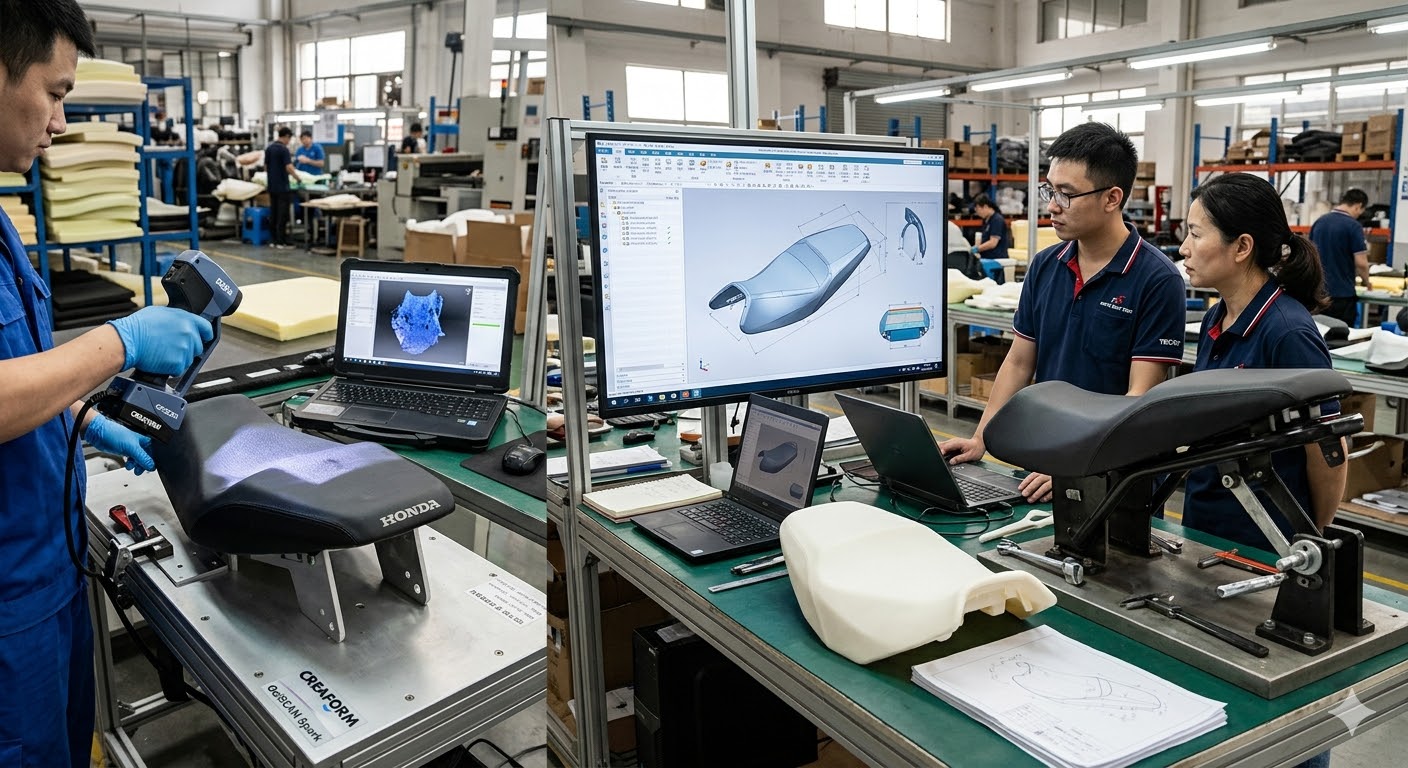
Factory lab photo showing dimensional review equipment, a CAD-linked seat reference, and bench checks used before sample or tooling decisions.
Production-line photo showing organized trim workstations, seat foam, cover materials, and assembly flow for repeatable motorcycle seat programs.
We tune density, rebound, hardness, and support behavior for commuter, touring, scooter, and performance seat programs.
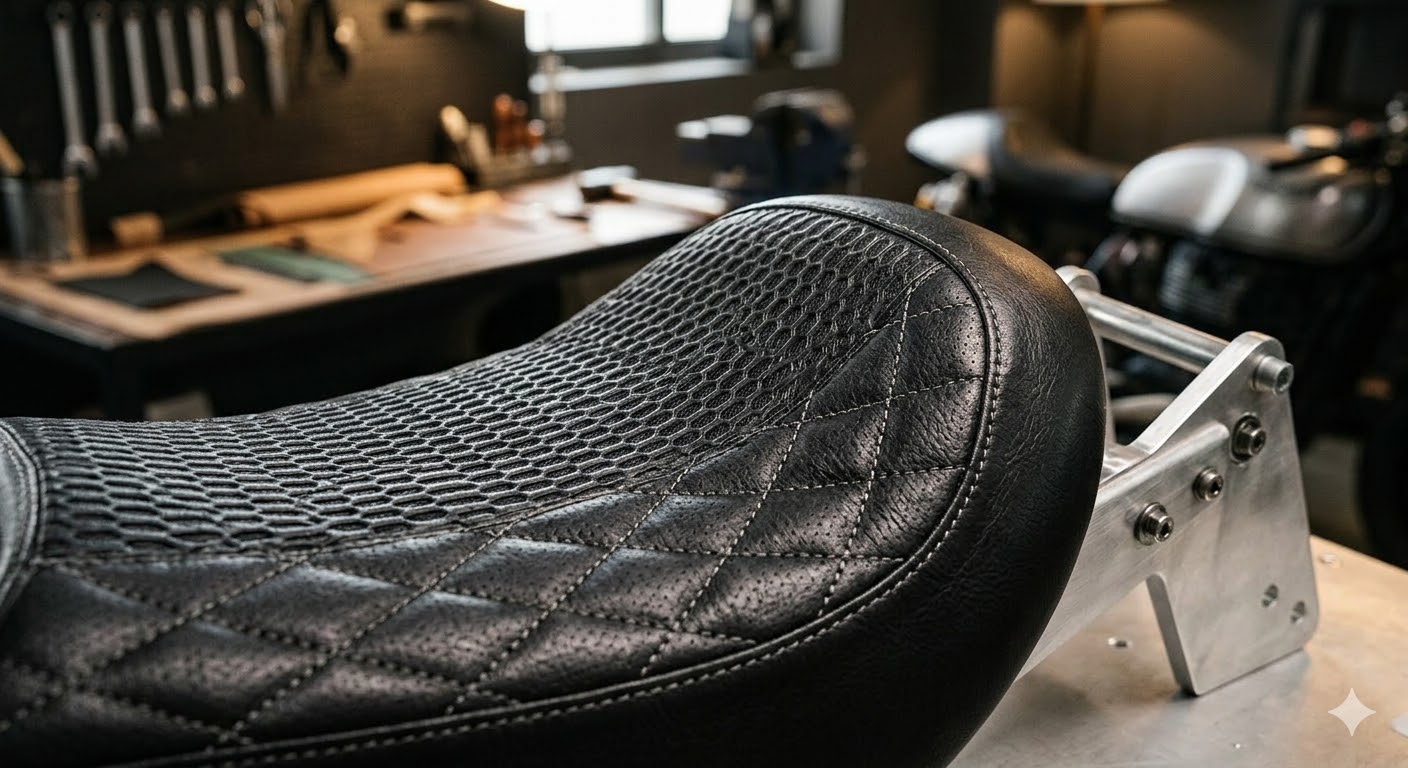
Cover fit, stitch path accuracy, texture alignment, and premium appearance are treated as engineering outputs.
Design intent, prototype feedback, mold assumptions, and production constraints stay linked through the entire development path.
Yes. Huixing's process is built to accept CAD, 3D scans, benchmark samples, or legacy seat references and convert them into manufacturable seat architecture.
No. It covers the full path from early engineering and sample validation to tooling, PU foam molding, sewing precision, pilot runs, and SOP supply.
The page emphasizes reverse engineering, complex PU foam formulation, high-precision sewing, and disciplined transition into mass production.
Send the current seat data, target platform, and annual volume so we can recommend the right prototype, tooling, and launch route.